When Harm Has No Bruises
The Evolving Architecture of Undetectable Abuse
2/6/20263 min read

Even the uncomfortable truths need to be faced. There is a persistent failure in how certain forms of harm are discussed—particularly those involving witchcraft, ritualized threats, and belief-mediated coercion. The failure is not merely academic or semantic. It has consequences.
Too often, these practices are described as beliefs rather than actions, as perceptions rather than interventions, and as cultural narratives rather than techniques of control. In doing so, the discourse unintentionally relocates danger from the external world into the victim’s mind. This framing is not neutral. It obscures responsibility, protects perpetrators, and leaves entire categories of abuse poorly understood and largely un-policed.
This article argues for a different understanding—one that recognizes these practices as part of an evolving set of harassment and compliance-enforcement techniques, used within profoundly imbalanced power dynamics, and increasingly adapted to modern contexts of trafficking, corruption, and organized silencing.
Beyond “Belief”: Why the Language Fails
To describe witchcraft-related harm as “mere belief” is to collapse complex social practices into psychology alone. This does not reflect lived reality, nor does it align with the findings of many international studies that document structured, intentional actions carried out by identifiable actors, often for material or strategic gain.
The problem is not acknowledging belief systems. The problem is stopping there.
When harm is framed exclusively as belief:
The perpetrator disappears from analysis.
The transaction (payment, instruction, threat) becomes invisible.
The intent to dominate, silence, or exploit is neutralized.
This mirrors earlier failures to recognize psychological abuse, coercive control, and non-physical torture as real harms. For decades, those abuses were dismissed precisely because they left no immediate forensic trace.
Witchcraft as Practice, Not Abstraction
Across cultures, witchcraft is not simply an idea held in isolation. It is a set of practices—performed, mediated, transmitted, and enforced through social structures. These practices may differ in form, symbolism, or explanation, but they share operational features:
Deliberate acts performed by one party toward another
Intermediaries or practitioners who confer authority or inevitability
Ritualized threats that imply punishment for non-compliance
Social reinforcement, often involving family, community, or surveillance
The effects are measurable, even if the metaphysics are contested: fear, compliance, silence, withdrawal, illness (psychological or psychosomatic), and long-term disempowerment.
The harm does not depend on external observers accepting supernatural causation. It depends on power being exercised through fear that cannot be easily disproven or escaped.
An Evolving Harassment Architecture
What is increasingly evident—particularly in contexts involving trafficking, corruption, or institutional abuse—is that these practices do not exist in isolation. They form part of a broader architecture of harassment and control, which adapts over time.
Researchers and advocacy groups have identified a growing list of non-physical harassment techniques used to destabilize, intimidate, and condition targets. While terminology varies, commonly cited methods include:
Persistent surveillance or the perception of being watched
Coordinated harassment by multiple actors
Staged encounters or “street theatre” meant to intimidate or disorient
Symbolic threats designed to reinforce inevitability
Gaslighting and narrative manipulation
Social isolation and reputational sabotage
Witchcraft-related practices fit seamlessly into this ecosystem. They are particularly effective because they:
Require no constant physical enforcement
Outsource control to fear itself
Undermine trust in external protection (including the law)
In this sense, they are not archaic remnants of the past. They are adaptive techniques, evolving alongside modern forms of coercion.
Power, Resources, and Reinforced Fear
The danger intensifies when these practices are backed by resources and authority.
When those in positions of power—political, economic, institutional, or criminal—can reinforce fear through money, influence, or access to networks, the line between belief and enforcement collapses entirely.
In such contexts:
Fear is validated by real-world consequences
Resistance appears futile or dangerous
Compliance becomes a rational survival strategy
This is why these techniques are so effective in trafficking operations, but also why they are used to protect corruption, silence whistle-blowers, and suppress accountability. They are tools of desperation—employed when exposure would be catastrophic.
The Legal Blind Spot
Modern legal systems are designed to detect harm through evidence that is visible, measurable, and attributable. Coercive practices that operate through belief, suggestion, and social pressure exploit a blind spot.
What cannot be easily proven is often treated as unreal.
This does not mean the law endorses these practices. It means it has not yet caught up to the ways power can be exercised without overt violence. As a result, intervention is delayed until damage is irreversible.
Reframing the Conversation
The question we should be asking is not:
“Does witchcraft really work?”
But rather:
“How are practices—whatever their explanation—being used to dominate, silence, and exploit people while evading accountability?”
This shift matters. It keeps harm external, responsibility intact, and victims credible.
Belief is not the crime.
The exploitation of belief is.
Why Awareness Is Urgent
When society dismisses these harms as imaginary, cultural, or irrational, it participates—unwittingly—in their effectiveness. Silence and disbelief are not neutral positions. They are enabling conditions.
These practices persist precisely because they are difficult to name, harder to prove, and uncomfortable to confront. Yet they exist, adapt, and thrive where power is unchecked and exposure must be prevented at all costs.
Closing Reflection
The most enduring forms of abuse are not always those inflicted with force, but those that leave no marks, produce no clear perpetrator, and teach the victim that resistance is dangerous and futile.
To recognize this is not to abandon reason.
It is to take harm seriously—even when it refuses to look the way we expect.
must-read
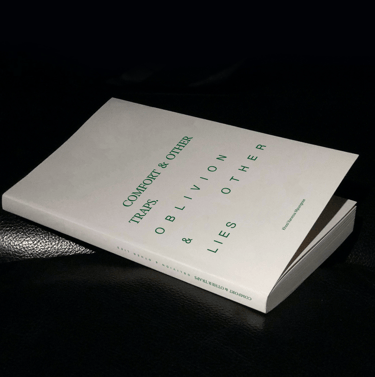
Comfort and Other Traps lets you in on how things unfold, provides background which may uncover deeper truths that might explain why this trial has been arduous.
get early updates
ESCAPE & INTERFACE © 2025. All rights reserved.
Substack